

Unreal Engine 5 – One Course Solution For Niagara VFX by Vince Petrelli
Duration:17.5 hours
Actual Duration:17h 14m
Release date:2026
Publisher:Udemy
Skill level:Beginner
Language:English
Exercise files:Yes
Software:Unreal Engine 5, Niagara, Blender
Course URL:https://www.udemy.com/course/unreal-engine-5-one-course-solution-for-niagara-vfx
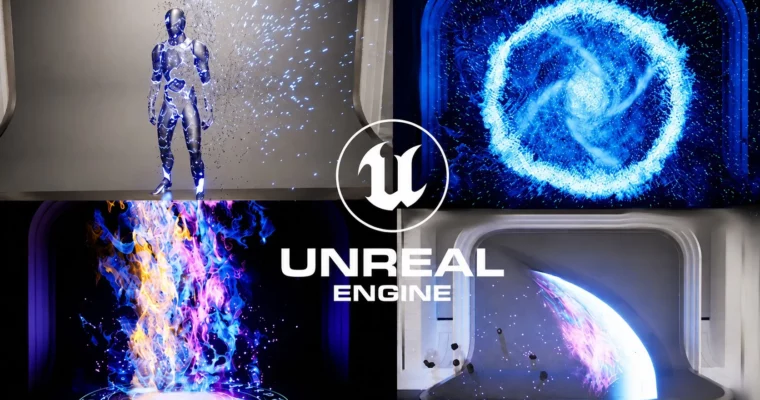
This course is a complete walkthrough for creating VFX in Unreal Engine 5 using Niagara. You’ll start with the absolute basics—no prior knowledge needed—and build up to complex effects like character disintegration, rain, waterfalls, and attack abilities. It’s a hands-on, project-based approach where you learn by doing, not just watching.
🎯 What you’ll learn
- Create different types of game-ready VFX using Niagara emitters and renderers
- Build master materials for VFX and bake noise textures directly in Unreal
- Use blueprints to program VFX behavior and spawners
- Create custom Niagara modules for unique particle behaviors
- Develop environment FX like dandelion, rain, and waterfalls
- Build attack FX like energy strikes, lightning hits, and projectiles
✅ Requirements
- Skills: No prior knowledge of Niagara needed—everything is taught from scratch. Basic familiarity with Unreal Engine’s interface is helpful but not required.
- Tools: A computer capable of running Unreal Engine 5. Blender is used briefly for creating a projectile mesh, so having it installed is recommended.
- Hardware: A dedicated GPU with at least 8GB VRAM is recommended for smooth performance in Unreal Engine 5.
📝 Description
This isn’t just another tutorial dump. It’s a structured path that takes you from zero to a solid understanding of Niagara in Unreal Engine 5. The course is split into three logical sections, each building on the last. You start with the fundamentals—emitters, renderers, and materials—by creating simple effects like a floating dandelion and a flamethrower. These early projects get you comfortable with the interface and core concepts without overwhelming you.
The second section ramps things up. You’ll tackle full-blown attack effects: portals, meteor strikes, laser beams, energy strikes, and projectile slashes. This is where you’ll start using blueprints to create VFX spawners and control behavior dynamically. You’ll also jump into Blender to model a projectile mesh, then bring it back into Unreal to use with Niagara. It’s a realistic look at how VFX artists work across tools.
The final section is where things get interesting. You’ll learn to write custom Niagara modules—the building blocks for truly unique particle behaviors. This knowledge powers advanced effects like rain with collision events, waterfalls with caustics, and a full character disintegration sequence using distance fields and material dissolves. By the end, you’re not just following steps; you understand why each node and parameter works the way it does.
The teaching style is direct and practical. Each effect is broken down into manageable chunks, with challenges sprinkled throughout to test your understanding. You’re not just watching—you’re building a portfolio of VFX that proves you can handle real game development tasks.
🧑🎓 Who this course is for
- Learners who want to create VFX in Unreal Engine 5 using Niagara, starting from scratch
- Game developers looking to add polish to their projects with custom particle effects
- 3D artists who want to expand their skillset into real-time VFX
- Anyone interested in learning how to build VFX materials and meshes for games
🧑🏫 About the Author
Vince Petrelli is a VFX artist and instructor with a focus on Unreal Engine 5 and Niagara. He has created this course to be a one-stop resource for learning Niagara, drawing from his experience in game development and real-time effects. His teaching style is hands-on and project-oriented, emphasizing practical skills over theory. He’s known for breaking down complex systems into understandable steps, making advanced VFX techniques accessible to beginners.
🏁 Final Result
By the end of this course, you’ll have a portfolio of game-ready VFX, including a portal effect, meteor attack, laser attack, energy strike, projectile slash, rain system, waterfall, and a character disintegration sequence. You’ll also have a solid grasp of Niagara’s architecture—emitters, modules, parameters, and renderers—so you can create your own custom effects from scratch. Plus, you’ll know how to integrate blueprints to make your VFX interactive and responsive in a game environment.
 Channel