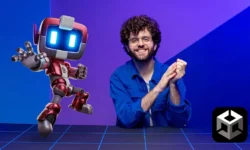


How to become Technical Artist in Game Development by Viacheslav Makhynko

Duration:3.5 hours
Actual Duration:3h 17m
Release date:2026, January 2
Publisher:Udemy
Skill level:Beginner
Language:English
Exercise files:Yes
Software:Unreal Engine, Unity, Houdini, Substance Designer, Substance Painter, 3ds Max, Maya, Python, HLSL
Course URL:https://www.udemy.com/course/technical-artist/
This course cuts through the noise. Instead of a random collection of tutorials, it gives you a clear, strategic overview of what it actually takes to become a Technical Artist. You’ll learn the core hard and soft skills, get a high-level look at key tools and pipelines, and walk away with a focused learning plan to land that first job.
🎯 What you’ll learn
- Identify the specific hard and soft skills required for a Technical Artist role.
- Understand the rendering pipeline and optimization techniques for real-time engines.
- Get a practical overview of scripting with Python, MaxScript, MEL, and VEX.
- Grasp the fundamentals of procedural modeling in Houdini and material creation in Substance Designer.
- Learn the basics of node-based and HLSL shader creation.
- Understand how to build and manage a production art pipeline.
- Prepare effectively for a Technical Artist job interview.
✅ Requirements
- Skills: No previous game dev, art, or programming experience required, but any background helps.
- Tools: A computer with internet access.
- Hardware: A computer capable of running modern game engines and 3D software.
📝 Description
The path to becoming a Technical Artist is notoriously unclear. You’re expected to know a bit of everything—scripting, shaders, pipelines, and art—but where do you even start? This course is the answer. It’s not a deep dive into a single tool; it’s a strategic overview of the entire landscape.
Viacheslav breaks down the role into its core components. You’ll get a high-level look at real-time engines like Unreal and Unity, covering rendering pipelines and profiling. Then, you’ll touch on scripting with Python, MaxScript, and MEL, followed by procedural workflows in Houdini and material creation in Substance Designer. The course also covers the often-overlooked soft skills—communication, proactivity, and problem-solving—that are just as critical for a Tech Artist.
The goal is to give you a clear map. After this course, you’ll know exactly what you need to learn next and, more importantly, why you need to learn it. It’s the foundation you build your career on.
🧑🎓 Who this course is for
- Highly motivated beginners who want a clear path to a Technical Artist role.
- Programmers (gameplay, tools, 3D) who want to bring more artistic awareness to their pipelines.
- Experienced artists and animators looking to develop their technical skills.
- Game designers interested in moving towards a Technical Design or Technical Art role.
🧑🏫 About the Author
Viacheslav Makhynko is a full-time Technical Artist at Ubisoft with over six years of experience on major AAA titles, including Watch Dogs Legion, Far Cry 6, and Beyond Good and Evil 2. He started his career as a Tester and evolved through Tech QA to become a Tech Artist. His own non-linear path gives him a unique perspective on how to simplify the learning process for others.
🏁 Final Result
- A clear, actionable roadmap of the skills and knowledge required to pursue a Technical Artist role.
- A foundational understanding of the key tools and pipelines used in AAA game development.
- A prepared portfolio and interview strategy to help you land your first job.
 Channel