

Procedural modeling in Houdini Combined by Rohan Dalvi

Duration:5 hours 48 minutes
Actual Duration:5h 45m
Release date:2019, October
Publisher:Rohan Dalvi
Skill level:Intermediate
Language:English
Exercise files:Yes
Software:Houdini, Daz 3D, Substance Painter
Course URL:https://www.rohandalvi.net/procedural
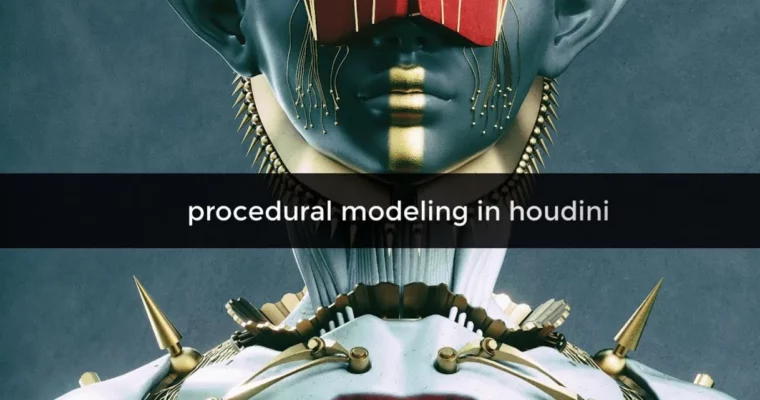
This course dives into creating dynamic, frame-by-frame evolving armor and skin for characters, all built procedurally within Houdini. You’ll learn to generate endless variations of armor designs, making your character models truly unique and adaptable.
🎯 What you’ll learn
- Generate complex armor patterns using Voronoi fracturing and clustering.
- Add intricate details to armor pieces with VDB operations.
- Create organic wireframes and exoskeleton structures.
- Bake high-resolution details onto low-resolution meshes.
- Design character accessories like helmets and neck frills procedurally.
- Utilize Daz 3D for character base models and export to Houdini.
- Apply Mantra baking tools and Substance Painter for detail transfer.
✅ Requirements
- Skills: Basic understanding of 3D modeling concepts, familiarity with navigating 3D software interfaces.
- Tools: Houdini (any version, including Apprentice), Daz 3D (for base mesh), Substance Painter (for baking and texturing).
- Hardware: A computer capable of running Houdini and Daz 3D smoothly. A dedicated GPU is recommended for better performance.
📝 Description
This training focuses on leveraging Houdini’s procedural capabilities to create unique character armor and skin. You’ll start by setting up a character model, likely imported from Daz 3D, and then dive into building complex armor systems. The core of the course involves using techniques like Voronoi fracturing and clustering to generate intricate patterns, which are then detailed using VDB operations. We’ll explore methods for creating connecting elements, like exoskeletons and wires, using point generation and pathfinding. The training also covers essential pipeline steps, including baking high-resolution details down to a low-resolution mesh using Mantra and preparing them in Substance Painter. You’ll also get a glimpse into creating shaders for these baked details. The flexibility of Houdini means you can achieve variations that change with every frame, offering a vast array of design possibilities.
🧑🎓 Who this course is for
- 3D artists looking to master procedural modeling in Houdini.
- Character artists wanting to create unique and dynamic armor designs.
- Technical artists interested in non-destructive workflows for character customization.
- Students aiming to expand their Houdini skillset beyond basic modeling.
🧑🏫 About the Author
Rohan Dalvi is a seasoned 3D artist and educator known for his in-depth tutorials on Houdini and other CG software. He has a knack for breaking down complex technical concepts into digestible lessons, empowering artists to tackle challenging projects. His work often showcases innovative uses of procedural techniques in character and environment design.
🏁 Final Result
By the end of this course, you’ll have a portfolio-ready character model featuring intricate, procedurally generated armor and skin. You’ll possess the skills to create dynamic designs that can change frame-by-frame, along with the knowledge to bake these details for use in game engines or other pipelines.
 Channel