

Creating a Sci-fi Dome Barrier in Unreal Engine by Fabio M. Silva

Duration:3h 57m 32s
Actual Duration:3h 57m
Release date:2026, May
Publisher:Gnomon
Skill level:Advanced
Language:English
Exercise files:Yes
Software:Substance Designer, Unreal Engine
Course URL:https://www.thegnomonworkshop.com/workshops/creating-a-sci-fi-dome-barrier-in-unreal-engine
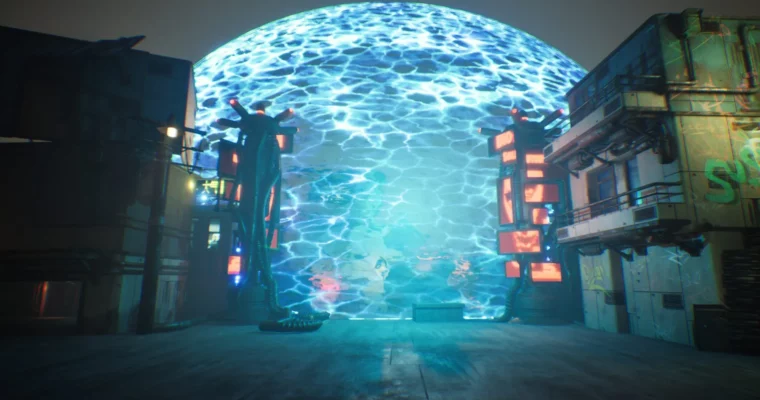
Fabio M. Silva, a three-time VES Award winner, walks you through building a reactive sci-fi shield system in Unreal Engine 5. This isn’t about static materials—it’s about making a barrier that feels alive, tracking every hit and responding in real time. Over nearly four hours, you’ll go from setting up Render Targets to wiring Blueprint logic for projectiles and explosions, all while keeping performance in check for AAA games.
🎯 What you’ll learn
- Build a multi-stage, reactive Dome Material in Unreal Engine 5
- Set up Render Targets to track spatial impact data on a surface
- Create Blueprint logic for projectiles, explosions, and weapon systems
- Simulate and export high-fidelity flipbooks in EmberGen
- Construct custom Niagara particle systems for weapon and shield effects
- Author optimized, tileable VFX textures in Substance Designer
✅ Requirements
- Skills: Intermediate understanding of Unreal Engine 5 and Niagara; familiarity with basic material graphs
- Tools: Substance Designer, EmberGen
- Hardware: Dedicated GPU (NVIDIA GTX 1060 or equivalent), 16GB RAM
📝 Description
This workshop cuts the fluff and gets straight to the technical meat of building a reactive VFX system. Fabio starts by breaking down the creative brief—how to deconstruct a reference sheet into actionable milestones before touching the engine. From there, it’s all about the pipeline.
You’ll first generate tileable textures in Substance Designer, then move into Unreal Engine 5 to build the Dome Material. Fabio shows you how to layer Fresnel effects, scrolling parameters, and distortion to get that high-tech look without bloating the shader. The real magic happens in the Render Target setup: you’ll learn how to capture coordinate data so the barrier “knows” exactly where a projectile hits, triggering a localized visual response.
The Blueprint logic ties it all together. You’ll wire up projectiles, explosions, and the barrier to communicate seamlessly, then use EmberGen to simulate fire and smoke flipbooks for weapon impacts. Finally, you’ll assemble everything in Niagara—particle trails, shield explosions, and weapon effects—into a single, polished scene. Fabio also shares his industry insights on R&D, pipeline optimization, and prioritizing visual impact within engine constraints.
🧑🎓 Who this course is for
- Intermediate to advanced VFX artists looking to build complex, reactive systems
- Technical artists wanting to bridge the gap between shader logic and gameplay interaction
- Professionals aiming to transition from standalone effects to integrated AAA workflows
🧑🏫 About the Author
Fabio M. Silva is a freelance VFX Director with over 15 years in the industry. He’s worked at Naughty Dog (Uncharted 4, The Last of Us 2), Blizzard, Epic Games, Crytek (Ryse: Son of Rome), Guerrilla Games, and Striking Distance Studios (The Callisto Protocol). A three-time Visual Effects Society (VES) Award winner, Fabio specializes in high-fidelity, cinematic effects for AAA titles.
🏁 Final Result
- A complete, reactive sci-fi dome barrier system in Unreal Engine 5, including the material, Blueprint logic, Niagara particles, and weapon setup, ready for your portfolio.
 Channel