

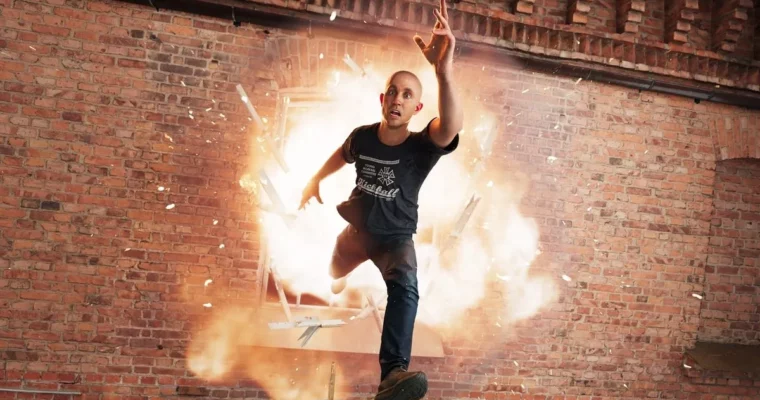
Creating Efficient Digital Doubles for VFX by Pat Imrie
Duration:2h 59m 22s
Actual Duration:3h 0m
Release date:2024, September
Publisher:Gnomon
Skill level:Beginner
Language:English
Exercise files:Yes
Software:Maya, Faceform Wrap, ZBrush
Course URL:https://www.thegnomonworkshop.com/workshops/creating-efficient-digital-doubles-for-vfx
This workshop is a straight-to-the-point guide for anyone who needs to crank out digital doubles for VFX without getting bogged down. Pat Imrie, a veteran asset lead, walks you through his exact pipeline using Maya, Faceform Wrap, and ZBrush. You’ll learn how to prep scan data, match base meshes, build clothing, and test your textures—all in about three hours. No fluff, just the practical steps you’d use on a real show.
🎯 What you’ll learn
- Prepare and optimize scan data for multiple levels of detail.
- Use Wrap to accurately fit a base mesh to scanned geometry.
- Quickly replicate clothing using Maya and ZBrush techniques.
- Build a basic pose rig for repositioning your asset.
- Project and validate texture maps for downstream departments.
✅ Requirements
- Skills: Basic familiarity with Maya and ZBrush interface.
- Tools: A 3-button mouse is recommended.
- Hardware: Minimum 16GB RAM, a dedicated GPU is recommended for viewport performance.
📝 Description
This isn’t a theory-heavy lecture. Pat Imrie designed this workshop to mirror a real studio task. You start with raw scan data from Clear Angle Studios and learn exactly how to prep it so you can pull multiple levels of detail from a single source. The core of the course is about making smart decisions: knowing when to go all-in on detail for a hero shot and when “good enough” is the right call for a background character.
Pat spends a lot of time on Wrap by Faceform, showing you how to match your base mesh to the scan with precision. He then moves into Maya and ZBrush for clothing replication, using techniques that are fast but still hold up under scrutiny. You’ll also build a simple pose rig to get your asset out of the scan pose and into an A-pose, which is a critical step for rigging and texturing departments.
The final lessons focus on quality control. Pat shows you how to set up a basic render test to check your displacement and color maps before passing the asset downstream. This is the kind of practical, pipeline-aware thinking that saves you from getting your asset bounced back. By the end, you’ll have a solid, repeatable workflow for creating digital doubles that actually work in production.
🧑🎓 Who this course is for
- Beginners who want to learn a professional digital double workflow from scratch.
- Character artists and modelers looking to update their pipeline with modern techniques.
- VFX generalists who need to understand how digi doubles fit into a larger production.
🧑🏫 About the Author
Pat Imrie is a Lead Freelance Asset Artist with over 18 years in the VFX industry. He’s worked at top studios like DNEG, Cinesite, Framestore, and Scanline VFX on projects including Aquaman and the Lost Kingdom, The Witcher, and Black Panther: Wakanda Forever. He’s also been teaching CG and VFX for over 15 years, so he knows how to break down complex workflows into clear, actionable steps.
🏁 Final Result
- A fully textured and posed digital double asset, ready for rigging and look development.
- A clean base mesh topology file (provided as a project file) that you can reuse for future characters.
- A practical understanding of how to manage LODs and hand off assets to other departments.
 Channel