

Ad Clicks : Ad Views : Ad Clicks : Ad Views : Ad Clicks : Ad Views : Ad Clicks : Ad Views :
Oh Snap!

It looks like you're using an adblocker. Adblockers make us sad. We use ads to keep our content happy and free. If you like what we are doing please consider supporting us by whitelisting our website. You can report badly-behaved ads by clicking/tapping the nearby 'Advertisement' X text.

3ds Max Fluid Simulation by Bifrost by Marcello Pattarin

3ds Max Fluid Simulation by Bifrost by Marcello Pattarin

/

Author:Bifrost by Marcello Pattarin

Duration:5 hours 31 minutes

Actual Duration:5h 32m

Release date:2026

Publisher:Udemy

Skill level:Intermediate

Language:English

Exercise files:Yes

Software:3ds Max, Bifrost, Arnold, V-Ray

Course URL:https://www.udemy.com/course/3ds-max-fluid-simulation-with-bifrost

Learn to create realistic liquid simulations, foam, and viscous fluids in 3ds Max using Bifrost, then render them in Arnold and V-Ray.

This course is a practical walkthrough of Bifrost inside 3ds Max, focused entirely on getting you comfortable with liquid simulation. You’ll start with the basics—creating a liquid, setting up collisions, and understanding the cache system—then move into rendering with Arnold and V-Ray. By the end, you’ll have simulated honey, foam, fountains, and more, with a solid grasp of how to manage simulation data and optimize your scenes.

🎯 What you’ll learn

  • Create and simulate liquids using Bifrost in 3ds Max
  • Render fluid simulations in both Arnold and V-Ray
  • Generate and control foam, viscous liquids, and motion fields
  • Manage simulation caches and mesh data efficiently

✅ Requirements

  • Skills: Basic knowledge of 3ds Max
  • Tools: 3-button mouse
  • Hardware: Minimum 16GB RAM, dedicated GPU

📝 Description

This isn’t a theory-heavy lecture series. It’s a hands-on, project-based look at how Bifrost handles liquids inside 3ds Max. You’ll start by creating a simple liquid, setting up collisions, and understanding the cache system—the backbone of any simulation workflow. From there, you’ll jump straight into rendering with Arnold and V-Ray, comparing how each engine handles the same simulation data.

The course covers more than just water. You’ll work with viscous liquids like honey, learn how to emit and control foam, and use motion fields to drive your fluids in interesting ways. There’s also a dedicated section on the new Fluid Loader tools, which simplify how you bring cached simulations back into your scene. Each lesson comes with exercise files compatible with 3ds Max 2019 and newer, so you can follow along and test everything yourself.

A note: the course uses an AI-generated voice for the narration. The content itself is solid, but if you prefer human instructors, keep that in mind. The instructor has also included practical tips for scene settings and cache management, which are the kind of details that save you hours of trial and error on real projects.

🧑‍🎓 Who this course is for

  • Architects and surveyors looking to add fluid effects to visualizations
  • 3D artists and designers wanting to expand their simulation skillset
  • Students and teachers in 3D graphics programs
  • Anyone with basic 3ds Max knowledge interested in Bifrost

🧑‍🏫 About the Author

Marcello Pattarin is a graduate of the Brera Academy of Fine Arts and has over twenty years of experience with 3D modeling, rendering, animation, and effects. He was among the first in Italy to create video courses dedicated to rendering, and has since produced more than 5,000 video lessons distributed across major international 3D graphics platforms. He also works as a beta tester for 3ds Max, giving him direct insight into how the software evolves.

🏁 Final Result

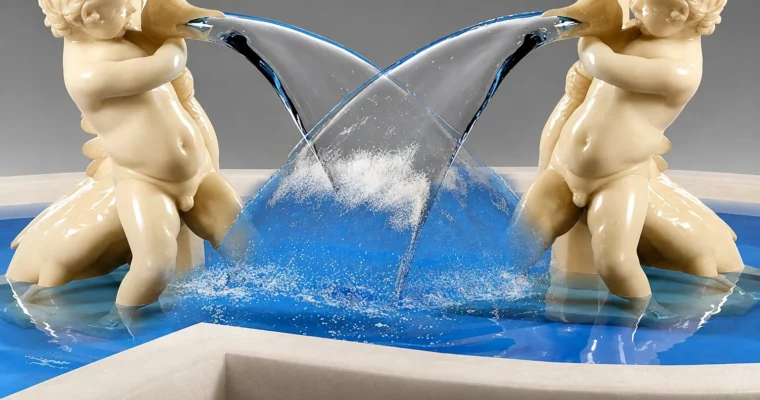
By the end of this course, you’ll have a portfolio of fluid simulation projects, including a honey pour, foam and wind interactions, and a complete fountain animation rendered in both Arnold and V-Ray. You’ll also have a solid understanding of cache management and simulation data workflows that you can apply to your own projects.

Curriculum

📋 Course content

  1. Module 1: Fluid Fundamentals
    • Fluid Introduction3:31
    • Creating the Liquid4:03
    • Collisions and Killer Planes3:09
    • Understanding Chaching5:56
    • The Simulation Parameters4:04
    • Liquid and Preset2:15
    • Objects and Collision2:05
    • Let’s calculate the simulation9:49
    • Il Display del Liquido4:06
    • Reload Cache and Simulation1:03
  2. Module 2: Arnold Rendering
    • Arnold Materials and Rendering7:20
    • Let’s do the rendering9:08
    • Duplicate the Simulation6:51
    • Rendering and Speed Simulation4:37
    • Rendering and Voxels 054:58
    • Arnold Surface Rendering5:52
    • Display Rendering Ratio7:02
    • Differenze Display Dynamic Mesh e Cache10:10
    • Surface Mesh and Implicit6:40
    • Render Particles or Voxels2:43
    • Surface Controls5:06
    • Surface Filters6:20
    • Dynamic Render Cache11:58
    • Render and Viewport5:35
  3. Module 3: V-Ray Rendering
    • Merge and Liquid in Vray5:10
    • Vray materials4:24
    • Vray Lights and Camera3:18
    • First Rendering in Vray3:27
    • Static Rendering in Vray7:17
    • Vray Animation VS Arnold2:35
  4. Module 4: Viscous Liquids (Honey)
    • Introduction Scene Honey5:31
    • Arnold Surface and Voxel Honey4:57
    • Mesh and Voxel Cache Ratio5:31
    • Honey Animation Comparison5:41
    • Tips for Studying Honey8:57
    • Final Scene Honey8:55
  5. Module 5: Foam and Wind
    • Foam Scene Setup6:42
    • Emission Parameters6:05
    • Move the Foam to the Surface6:05
    • Foam Final Scene5:34
    • Introducing Wind on Foam4:42
    • Final Scene Foam Wind7:36
    • Foam and Wind Animation2:17
    • Mask and Foam5:21
    • Volume Foam Mask7:22
  6. Module 6: Motion Fields and Advanced Forces
    • Inserting Motion Field into Fluid9:00
    • Motion Field Animation7:26
    • Fluid and Concentric Wave2:58
    • Fluid Around an Axis3:42
    • Fluid and Concentric Wave2:31
    • Fluid e Influenza Geometrie5:18
    • Fluid Speed and Boundaries Management8:19
  7. Module 7: Simulation Views and Loaders
    • Simulation View Creation and Solver5:41
    • Simulation View Options4:00
    • New Fluid Loaders5:40
  8. Module 8: Final Project – Fountain
    • The Fountain and Settings11:52
    • The Fountain Materials and Rendering6:32
    • Fountain Final Animations6:20
Watch online or Download for Free
3ds Max Fluid Simulation by Bifrost by Marcello Pattarin
NAME
SIZEDURATION
1 – First steps with Fluids
61.3 MB41m
3ds max Fluid_2018
3 MB0m
Rendering
3 MB0m
001_Water
3 MB0m
001_Water Low
712.5 KB0m
002_Water Low Time 05
551.7 KB0m
003_Water High Time 05
1.1 MB0m
File 3ds max 2019 Fluid
3 MB0m
Rendering
3 MB0m
001_Water
3 MB0m
001_Water Low
712.5 KB0m
002_Water Low Time 05
551.7 KB0m
003_Water High Time 05
1.1 MB0m
File 3dsmax_2020 Udemy
3 MB0m
Rendering
3 MB0m
001_Water
3 MB0m
001_Water Low
712.5 KB0m
002_Water Low Time 05
551.7 KB0m
003_Water High Time 05
1.1 MB0m

Download all Videos (70)
488.3 MB5h 32m


Download all

Join us on
  Channel    and      Group

Leave a Comment

Your email address will not be published. Required fields are marked *