

Unreal Engine 5 – Traversal Parkour System using Blueprints by Make A Real One, Braveior Studios

Duration:12 hours
Actual Duration:12h 11m
Release date:2025, November
Publisher:Udemy
Skill level:Beginner
Language:English
Exercise files:Yes
Software:Unreal Engine 5, Blender, Mixamo
Course URL:https://www.udemy.com/course/unreal-engine-53-building-a-traversal-parkour-system/
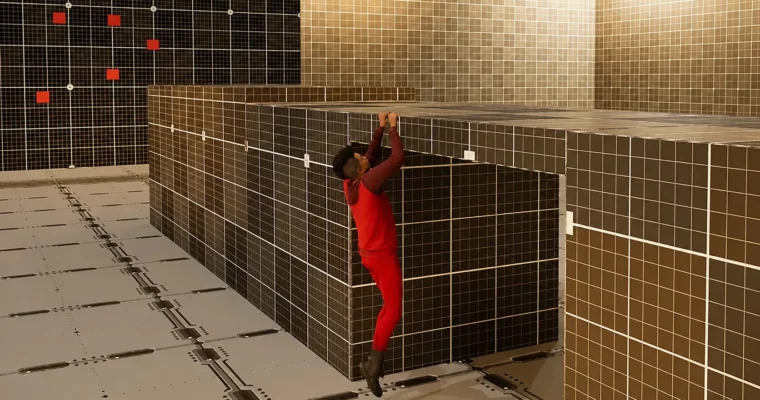
Build a traversal parkour system from scratch in Unreal Engine 5 using Blueprints. This course walks you through climbing, vaulting, mantling, and hopping mechanics, all powered by free Mixamo animations, Motion Warping, and Inverse Kinematics (IK). No C++ required.
🎯 What you’ll learn
- Use sphere, line, capsule, and box traces to understand the environment.
- Implement Motion Warping to dynamically move the character during animations.
- Apply Inverse Kinematics (IK) for hand and foot placement on walls.
- Manage states and actions with Gameplay Tags and Data Assets.
- Integrate the traversal component into the Lyra sample game.
✅ Requirements
- Skills: Basic knowledge of Unreal Engine and Blueprints.
- Tools: Unreal Engine 5.3 or 5.4 pre-installed, Blender (optional for root bone).
- Hardware: A gaming PC capable of running Unreal Engine 5.
📝 Description
This isn’t a pre-built asset pack. It’s a full workshop where you build a traversal parkour system step-by-step using Blueprints. You’ll start with a crash course on the core Unreal Engine concepts—traces, vectors, and helper functions—then jump straight into the system.
The course uses only free Mixamo animations. You’ll learn how to add a root bone in Blender, retarget them for Unreal Engine 5, and then use Motion Warping to make those animations snap to walls and ledges. Inverse Kinematics (IK) handles the fine details, dynamically placing hands and feet on uneven surfaces.
The real magic is in the grid scan logic. You’ll build a system that uses multiple trace types to measure walls, detect vaultable surfaces, and decide whether to climb, hop, or mantle. Everything is managed with Gameplay Tags and Data Assets, keeping the system clean and configurable.
There’s also a dedicated section on integrating the whole thing into the Lyra sample game, including weapon dropping and camera adjustments. By the end, you’ll have a solid foundation to build your own advanced traversal mechanics.
🧑🎓 Who this course is for
- Beginner or intermediate Unreal Engine developers wanting to build complex gameplay systems.
- Game developers looking to apply Blueprint features to create innovative movement mechanics.
- Absolute beginners ready to research and do hands-on work to speed up their learning.
- Developers who want to build their own reusable components for video game development.
🧑🏫 About the Author
Braveior Studios is run by Sreehari Parameswaran, a Senior Technical Product Architect and indie game developer with over 20 years of experience. He focuses on futuristic game development, the metaverse, and reusable frameworks for procedural content.
Make A Real One is a creator with 8 years of Unreal Engine knowledge, built on a strong foundation in programming and algorithm design. They also run a YouTube channel with educational content.
🏁 Final Result
- A fully functional traversal parkour system with climbing, vaulting, mantling, and hopping mechanics.
- A reusable Blueprint component that can be integrated into any third-person or Lyra project.
- A solid understanding of traces, Motion Warping, IK, and Gameplay Tags for future projects.
 Channel