

The power of Traditional Media by Nicolas Weis
Actual Duration:53m
Release date:2024, March
Publisher:IAMAG
Skill level:Intermediate
Language:English
Exercise files:Yes
Software:Traditional Media
Course URL:https://app.swapcard.com/event/iamag-master-classes-2024/planning/UGxhbm5pbmdfMTc5ODkzOQ==
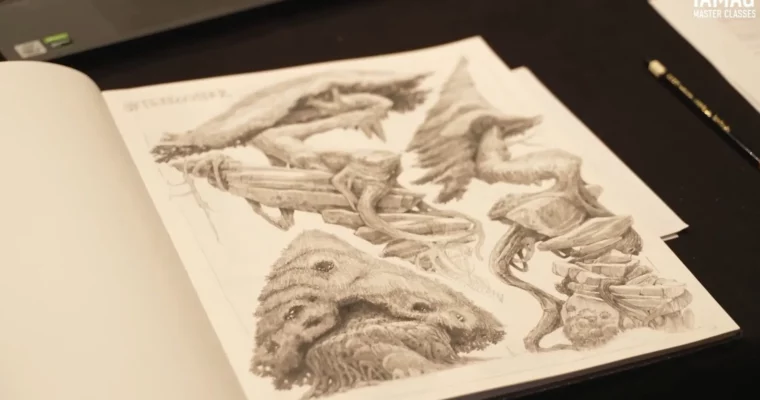
This is a no-nonsense master class on why paper still matters when you work in film and animation. Nicolas Weis shows how quick traditional sketches help you think faster, test ideas under pressure, and walk into digital with something solid already solved.
🎯 What you’ll learn
- Use traditional sketching to lock ideas fast under studio deadlines and direction
- Build strong images with value structure instead of relying on heavy linework
- Control pencil pressure and layering to get clean gradients without killing paper texture
- Design readable environments and silhouettes that tell danger vs. safety in seconds
✅ Requirements
- Skills: Basic drawing fundamentals, familiarity with visual storytelling concepts
- Tools: Graphite pencils, sketchbook or textured paper, kneaded and plastic erasers
📝 Description
Look, we all live in Photoshop and Blender now. Nicolas makes a simple case: paper is faster when you need to think. He walks through how he uses quick traditional sketching in real visual development work — to pitch an idea to a director, to throw away ten bad versions in ten minutes, to keep the drawing honest before polish hides the problems.
A big chunk is about value structure. Forget clean outlines for a bit. Nicolas shows how to push your darks and lights apart to guide the eye, and why heavy lines near a light source flatten everything. You watch him barely touch the paper, stacking light layers of graphite to model form. It is all about pressure control and patience — letting the texture do the work instead of burnishing it dead.
Then he ties it to animation. In production, a location has to read instantly. He breaks down silhouette design and environment design choices that tell the audience where they are and how they should feel, with zero explanation. Dangerous cliff camp versus safe village? You should feel it from the shapes alone. Practical stuff you can use on Monday.
🧑🎓 Who this course is for
- Concept and vis-dev artists who feel stuck or too tight working only digital
- Animation students and environment designers who want faster, more readable thumbnails
- Freelancers and studio artists who need to communicate ideas clearly to directors
🧑🏫 About the Author
Nicolas Weis has spent over 15 years in entertainment, including a decade in-house in Los Angeles at DreamWorks Animation and Paramount Animation before going freelance in visual development. His feature credits include How to Train Your Dragon, The Croods, Astro Boy, and Locksmith Animation’s Bad Fairies. He teaches from that studio floor experience — what actually survives deadlines, notes, and production pressure.
🏁 Final Result
- A series of traditional value studies and environment thumbnails built with layered graphite, showing clear light logic and fast-reading silhouettes ready for your portfolio or to take into digital paint-over.
 Channel