


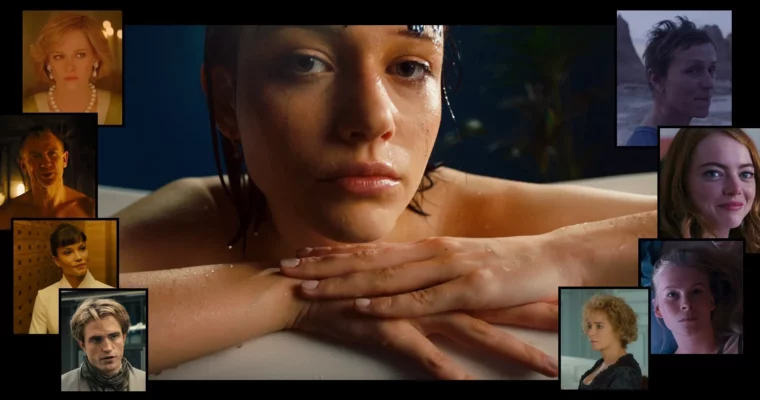
Reverse Engineering The Grade by Stefan Ringelschwandtner

Duration:4h 45min
Actual Duration:1h 44m
Release date:2026, May
Publisher:Mononodes
Skill level:Intermediate
Language:English
Exercise files:Yes
Software:DaVinci Resolve
Course URL:https://mononodes.com/course-reverse-engineering-the-grade/
Reverse Engineering the Grade is a practical course for colorists who want to stop guessing and start building looks with intention. Instead of relying on endless tweaking, you’ll learn a structural method for cinematic look development that’s based on deconstructing real Hollywood references. The entire workflow is built around a single, minimal node tree that stays consistent across every project, making your grades faster, cleaner, and far easier to replicate.
🎯 What you’ll learn
- Deconstruct nine iconic film looks using behind-the-scenes images as reference
- Build a repeatable, minimal node tree structure for consistent grading
- Read the vectorscope to analyze color harmony and balance effectively
- Apply the same structural approach to log-encoded footage
- Create and refine orange and teal looks using four different methods
- Understand printer lights and film-based thinking for natural color relationships
- Use a custom Contrast DCTL for filmic contrast response
- Shape print film emulation with intention rather than as a fixed recipe
✅ Requirements
- Skills: Basic understanding of DaVinci Resolve’s interface and node-based grading
- Tools: DaVinci Resolve (free version is sufficient)
- Hardware: Computer capable of running DaVinci Resolve smoothly
📝 Description
This course flips the typical color grading tutorial on its head. Instead of showing you a bunch of isolated tricks, it hands you a single, repeatable framework and then proves how far it can go. The core idea is simple: take behind-the-scenes stills from films like Tenet, Skyfall, and Children of Men, and rebuild those looks from scratch using a disciplined, minimal node tree. No custom DCTLs, no third-party plugins—just Resolve’s native tools and a clear understanding of how color relationships work.
The first part focuses on color theory in a way that’s actually useful. You’ll learn to read the vectorscope as a whole, understand color harmony patterns, and see why some orange and teal approaches feel unstable while others stay clean and controlled. The course compares four different methods for creating an orange and teal look and explains why one stands out as the most effective and flexible.
Part 2 is where the fun begins. You’ll work through nine different film looks, each built on the same fixed node tree structured around the Kodak 2383 LUT included with DaVinci Resolve. This consistency is the point—it shows how a single approach can adapt to wildly different visual styles. You’ll learn to read references, shape palettes, and make deliberate global adjustments without chasing complexity.
The third part transitions to real-world application. You’ll work with log-encoded footage and learn how to balance shots, prioritize skin tones, and maintain consistency across scenes with changing lighting conditions. The lessons on middle gray and order of operations give you practical anchors for making decisions that hold up across an entire sequence.
The final section pushes into advanced territory. You’ll explore contrast as a structural decision, understand how custom color tools work in high-end film production, and learn to shape print film emulation with intention. The course includes a custom-built, color space aware Contrast DCTL that delivers a filmic contrast response, plus lessons on recreating low-contrast looks from Asteroid City and Spencer.
🧑🎓 Who this course is for
- Colorists who want a repeatable, structural approach to look development instead of relying on intuition alone
- Editors and filmmakers who grade their own footage and want to understand how cinematic looks are built
- Anyone frustrated with complex node trees who wants a minimal, efficient workflow that still delivers high-end results
🧑🏫 About the Author
Stefan Ringelschwandtner is a Berlin-based colorist and DCTL developer with roots in the computer demoscene of the mid-90s. After studying Media Design and Film and Video at the Offenbach Academy of Art and Design, he spent years working in cinematography, 3D animation, and VFX. In 2021, he launched MONONODES.com to provide technical research and workflow deconstruction for the professional color community. His image processing tools are used by colorists on productions for Netflix, Disney+, Paramount, Apple TV, and Sky Atlantic.
🏁 Final Result
By the end of this course, you’ll have a complete, repeatable grading framework that you can apply to any project. You’ll have worked through nine film look recreations, built looks from log footage, and developed a deep understanding of how to read references and translate them into your own grades. The minimal node tree structure becomes a reliable foundation you can adapt to any visual style, saving you time and giving you confidence in every decision you make.
 Channel