

Insights From a Career In Film Design by George Hull

Actual Duration:48m
Release date:2025
Publisher:IAMAG
Skill level:Intermediate
Language:English
Exercise files:Yes
Course URL:https://iamagtools.com/master-class/insights-from-a-career-in-film-design-with-george-hull/
This is not a software tutorial. George Hull has spent decades designing worlds for films you have already watched, and here he talks through how he actually approaches a massive sci-fi brief — where the ideas come from, how he narrows them down, and how he pitches them. On top of that conversation, he runs a live demo of his marker and ink sketching method, the technique he leans on to get complex cinematic ideas onto paper fast.
🎯 What you’ll learn
- How a professional film designer breaks down a huge, vague brief into workable directions
- George Hull’s personal workflow for developing designs from first thumbnail to finished presentation sketch
- Practical marker and ink rendering techniques for building form, value and lighting on paper
- What it actually takes to move from art school into studio work on major feature films
- How traditional sketching still functions as a pitch and communication tool in a 3D and VFX pipeline
✅ Requirements
- Skills: Basic drawing fundamentals and a comfort with sketching by hand; some familiarity with visual development or concept design workflows helps
- Tools: Markers, ink pens, sketch paper and something to keep loose studies on
📝 Description
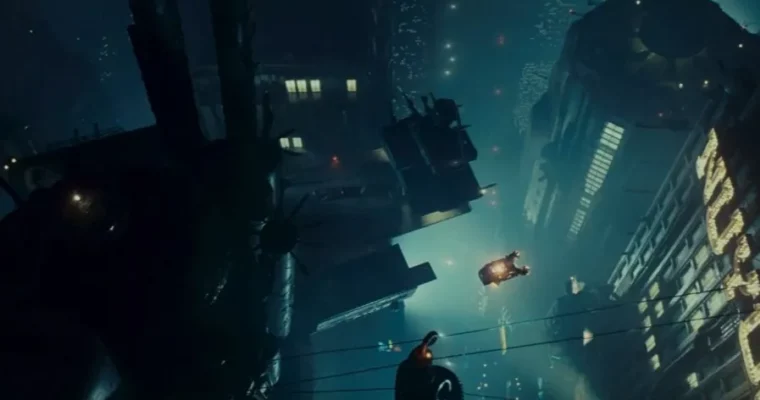
Most masterclasses about film design end up being a software walkthrough with a movie logo slapped on the thumbnail. This one is the opposite. George Hull sits down and talks through the actual thinking behind his work — how he reads a brief, what he throws away, and why certain ideas survive the process of visual development on a project the size of Blade Runner 2049.
The second half is a practical demo. George works through his marker and ink sketching approach on camera, covering how he lays in shapes, builds up value, and controls light to make a design read clearly. It’s a traditional medium, but that’s the point: it forces you to solve the design first instead of hiding behind render passes. If you have ever watched a film’s art book and wondered how those pages got made, this is the process.
There’s also the career side, and George doesn’t sugarcoat it. He started with a BFA in Industrial Design, got told by his own instructors that chasing Hollywood was ridiculous, and still ended up hired by Industrial Light & Magic straight out of school. He talks about that path honestly — the luck, the timing, and the work. If you’re trying to figure out how to get from where you are to a studio floor, that part alone is worth the runtime.
🧑🎓 Who this course is for
- Concept artists and illustrators who want to work on film and need to understand how studio-level design briefs actually get handled
- Designers who use 3D software daily and want to strengthen their hand-drawing and pitching skills
- Students and recent graduates trying to map a realistic route into visual effects or feature film design
- Anyone curious about the artistic process behind sci-fi and effects-heavy films
🧑🏫 About the Author
George Hull was born in India and raised in a small town in the American Midwest, and he came into the industry through a BFA in Industrial Design. His college instructors told him his Hollywood ambitions were ridiculous. Lucasfilm’s Industrial Light & Magic disagreed and hired him straight out of school.
At ILM he worked on the Oscar-winning Forrest Gump, then moved up to Lead Visual Effects Art Director on Mission: Impossible. Not long after, VFX legend Dennis Muren — a childhood hero of his — handpicked him for The Lost World: Jurassic Park and the Star Wars Special Editions. Since then he has become one of the most in-demand film designers working, with credits including Blade Runner 2049 and the Star Wars franchise.
🏁 Final Result
- A clear understanding of how a professional film designer approaches and resolves large-scale design briefs
- A working knowledge of marker and ink sketching technique you can apply to your own design work
- A set of finished traditional sketches in the style George demonstrates, ready for a sketchbook or portfolio
- A realistic picture of the career path into visual effects and film design, and what to focus
 Channel