

Character Body Mechanics – The 4 Core Motions by Q Kim
Duration:14 hours 52 minutes
Actual Duration:29h 42m
Release date:2022, May
Publisher:Coloso
Skill level:Beginner
Language:English
Exercise files:Yes
Software:Maya
Course URL:https://coloso.co.kr/products/3danimation_qkim
If you can sell a walk, a run, a jump, and a swing, you can animate pretty much anything. This class breaks those 4 motions down to body mechanics, timing, and blocking, then shows you how to twist them into tired walks, sprints, heavy jumps, throws, and more for a job-ready reel.
🎯 What you’ll learn
- How body mechanics actually work – center of gravity, pelvis, and spine interaction
- How to block out convincing walk cycles and vary them with pose and timing
- How to block out run cycles – jogging, sprinting, and happy runs
- How to sell weight in jumps – light vs. heavy takeoffs and landings
- How to animate swings and throws – sword swing, axe swing, shuriken, punch
- Maya for animators – interface, core tools, and workflow setup in Maya 2019
- The 12 principles of animation applied to real shots, not just theory
- Blocking, blocking plus, spline, and polish for film-quality output
- How to build shots with thumbnails, storyboards, cameras, and layout / previz
- How to shoot and analyze reference and put together an animation portfolio
✅ Requirements
- Skills: Basic understanding of 3D space, familiarity with Maya UI is helpful but not required
- Tools: Maya 2019 installed, 3-button mouse
- Hardware: Minimum 16GB RAM, dedicated GPU recommended for smooth viewport playback
📝 Description
Most beginner classes either stay stuck on bouncing balls or skip straight to finished polish. You see the first pose and the final result, but not the messy middle. Q Kim teaches it the other way. You start with how the body actually moves, then you block it, then you fix it.
The core idea is simple: learn the mechanical logic once, reuse it forever. You study center of gravity, weight shift, and how the pelvis and spine drive the arms and legs. Once that clicks, you don’t have to memorize 50 different walks. You adjust timing, spacing, and pose shapes and you get a tired walk, a happy walk, or a limp for free. Same for runs and jumps.
In Maya 2019 you go through the full animator workflow. Interface setup, key posing, blocking for storytelling, then blocking plus to add breakdowns and texture between poses, then spline and polish for that clean film feel. Q also covers stuff people usually skip: thumbnails and storyboards, cuts and camera choices, layout and previz, and how to shoot your own reference without overacting it.
What makes this class different is the volume of practical examples. You don’t just do one walk. You do walk basics plus happy, tired, and limping versions. Run basics plus jog, sprint, and happy run. Light and heavy jumps. Sword swing into axe swing, throw, and punch. By the end you have 12+ short character animation pieces that actually show range, not just one loop.
And it’s grounded in production reality. Q talks about how shots move through a team, how to work fast without breaking quality, and what recruiters look for in a junior reel. Short lessons, clear demos, lots of repetition on the poses that matter.
🧑🎓 Who this course is for
- Beginners in 3D animation who want solid walk, run, jump, and action basics that transfer to any rig
- Job seekers and junior animators building a first character animation portfolio with limited tools
🧑🏫 About the Author
Q Kim is a 3D character animator based between Seoul and New York, currently Professor in Film Studies at Chung-Ang University Graduate School of Advanced Imaging Science and Director at ENQ pictures. He has worked across TV, ads, features, games, and VFX at studios including Sony Pictures Imageworks, Cinesite, Framestore, and Curious Pictures.
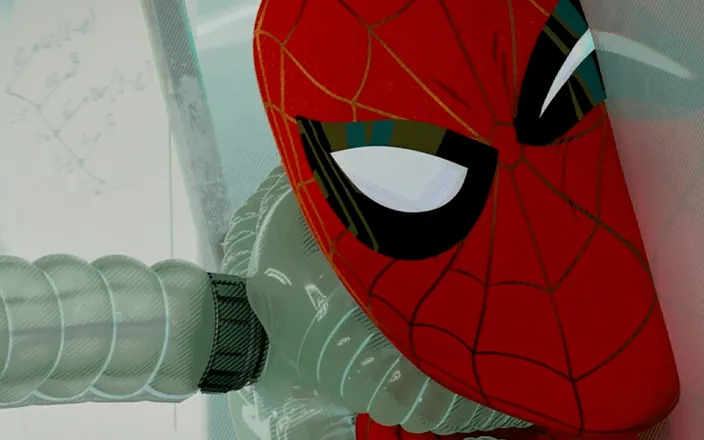
His credits include Spider-Man: Into the Spider-Verse, The Addams Family, Smallfoot, Talking Tom, Sonic Boom, and Plants vs Zombies, plus live-action and festival shorts screened at Hiroshima, Cannes, and the Student Academy Awards. He also serves as a juror for SIGGRAPH Asia and Scholastic Art & Writing Awards. He teaches the way he works in production: basics first, then fast, smart variations.
🏁 Final Result
- 12+ finished body mechanics shots – walk variations, run variations, light / heavy jumps, and swing / throw / punch variations, blocked, splined, and polished for portfolio use
📢 Guys, this is a Group Buy campaign, check the GBC forum thread to get access
You can find the course preview in the download section below.
 Channel