It looks like you're using an adblocker.
Adblockers make us sad. We use ads to keep our content happy and free. If you like what we are doing please consider supporting us by whitelisting our website. You can report badly-behaved ads by clicking/tapping the nearby 'Advertisement' X text.
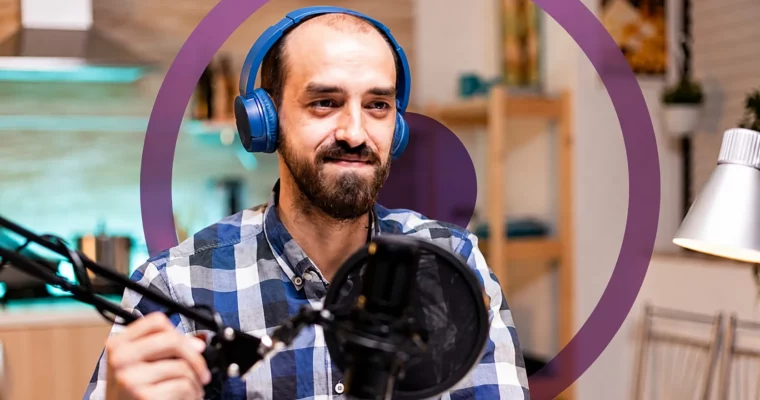
Producing Professional Audio and Video Podcasts by Richard Harrington
Learn how to plan, record, edit, and launch a professional-quality podcast on any budget, from a veteran producer.
Podcasting is one of the most cost-effective ways to build an audience, and this course cuts through the noise. Veteran producer Rich Harrington walks you through the entire process—from figuring out your show’s concept to getting it listed in directories. You’ll learn how to set up a studio without breaking the bank, record clean audio and video, edit like a pro, and handle the technical side of hosting and distribution. It’s a straight-to-the-point guide for anyone serious about starting a podcast.
🎯 What you’ll learn
Plan and outline a podcast show with a clear target audience.
Set up a recording studio for both audio and video on a budget.
Record and edit professional-sounding audio using Adobe Audition and Descript.
Edit a video podcast in Adobe Premiere Pro.
Compress and host your podcast files for distribution.
Optimize your RSS feed and promote your show.
✅ Requirements
Skills: Basic familiarity with your computer’s operating system.
Tools: A computer with internet access; a microphone (recommended).
Hardware: Headphones for monitoring audio.
📝 Description
This isn’t a theory class. Rich Harrington, who has produced hundreds of episodes himself, shows you the exact gear and workflows he uses. The course is built around practical, real-world scenarios. You’ll see him set up a studio, conduct an interview, and then take that raw footage all the way through post-production.
The curriculum is split into clear, actionable phases. First, you’ll tackle preproduction—defining your show’s concept, analyzing the competition, and mapping out episodes. Then, you’ll get into the nitty-gritty of gear selection, comparing microphones, audio interfaces, and video cameras. The editing sections are particularly strong, with dedicated walkthroughs for Adobe Audition (audio) and Adobe Premiere Pro (video), plus a look at Descript for AI-powered editing. Finally, you’ll learn the often-overlooked steps of compression, hosting, and feed optimization to make sure your podcast actually gets heard.
🧑🎓 Who this course is for
Aspiring podcasters who want a complete, start-to-finish workflow.
Content creators and marketers looking to add a professional podcast to their strategy.
Anyone who has started a podcast but wants to improve their audio and video quality.
🧑🏫 About the Author
Richard Harrington is a visual storyteller and veteran podcast producer who has been creating content for decades. He is the founder of Rhed Pixel, a company focused on empowering creative professionals. His experience spans photography, video, and the integration of AI into creative workflows. He brings a no-nonsense, practical approach to teaching, focusing on results over theory.
🏁 Final Result
A fully planned and outlined podcast show.
A recorded and edited audio or video podcast episode ready for distribution.
A properly configured RSS feed and hosting account.
A clear understanding of how to promote and track your podcast’s performance.
Curriculum
📋 Course content
Introduction
Producing great audio and video podcasts4:30
Using the exercise files1:32
1. What Is Podcasting?
A working definition of podcasting4:58
The role of the RSS feed2:59
The benefits of podcasting3:59
Key podcasting terms2:37
2. Preproduction Strategies for Podcasting
Mapping your production6:58
Analyzing your competition4:00
Maximizing your podcast’s budget4:04
Outlining a show8:16
Identifying guests for your show5:27
Mind mapping show topics5:16
3. Determining a Production Approach for Your Podcast
The benefits and drawbacks of audio podcasting4:32
The benefits and drawbacks of video podcasting4:08
The benefits and drawbacks of screencasting3:00
Publishing a multi-format show1:38
4. Setting Up a Studio for Podcasting
Selecting a microphone for podcasting6:20
Monitoring your recording5:54
Isolating and reinforcing audio for cleaner recordings3:55
Field recording equipment7:09
Voice over IP software8:05
Audio recording software options6:30
Adding a video camera to record yourself6:35
Adding a switcher for multiple video angles6:39
5. Podcasting Techniques
Podcast interview techniques7:06
Recording a podcast interview with Descript11:15
Editing a podcast interview with Descript7:30
Recording a screencast on a Mac12:16
Recording a screencast on a PC10:19
Setting up a recording with Zoom10:06
6. Editing a Podcast
Editing software options1:50
Importing audio files into Adobe Audition7:24
Editing an audio podcast with Adobe Audition15:29
Finalizing an audio podcast with Adobe Audition4:14
Importing files into Adobe Premiere Pro7:10
Making a rough cut edit in Premiere Pro8:31
Refining the visual edit in Premiere Pro13:07
Adding the final touches to your video podcast14:12
Exporting your podcast for delivery2:17
7. Compressing Podcast Files for Delivery
The need for compression3:28
Choose the right compression software3:31
Creating audio podcast files4:47
Creating video podcast files3:19
Testing your files before upload5:32
8. Hosting Podcast Files
Requirements for hosting podcast files3:24
Choosing a podcast host3:07
An overview of Really Simple Syndication3:21
Adding show art4:24
Creating show art with Photoshop6:52
Creating show art with Adobe Express6:26
Testing the podcast feed2:33
9. Delivering the Podcast
Optimizing your feed with FeedBurner3:14
Registering the podcast feed4:38
Using AI to write good show descriptions3:19
Getting listed as featured content2:18
Tracking your podcast feed1:30
Monitoring the health of your podcast feed2:47
Conclusion
Next steps1:49
Watch online or Download for Free
Producing Professional Audio and Video Podcasts by Richard Harrington



 Channel