

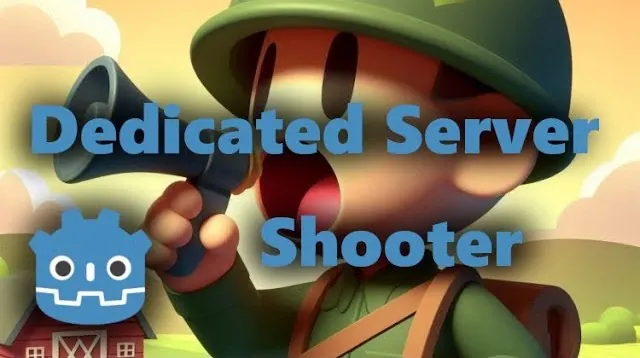
Create A Dedicated Server Multiplayer Shooter in Godot 4 by Eerik Hirvonen
Duration:13 hours on-demand video
Actual Duration:12h 52m
Release date:2025, October
Publisher:Udemy
Skill level:Intermediate
Language:English
Exercise files:Yes
Software:Godot 4, GDScript
Course URL:https://www.udemy.com/course/godot-dedicated-server-fps/
This course is a solid pick for developers who already know the basics of Godot 4 and want to move into real multiplayer game architecture. Instead of stopping at simple peer-to-peer demos, it walks through a proper dedicated server FPS setup with lobbies, matchmaking, weapon systems, lag handling, and the kind of project structure that keeps a bigger GDScript codebase from turning into spaghetti.
🎯 What you’ll learn
- Set up and host a dedicated server for a multiplayer FPS in Godot 4.
- Build server-client communication, matchmaking, and multiple lobby flows.
- Handle movement syncing, interpolation, buffering, and lag compensation.
- Create core shooter systems like weapons, hit registration, health, respawning, and scoring.
- Add game feel features such as grenades, audio, screen shake, HUD feedback, and match flow logic.
- Organize a larger networking project with cleaner architecture and project management.
✅ Requirements
- Skills: Basic understanding of Godot, nodes, and GDScript.
- Tools: Godot 4, a code editor, and an internet connection for multiplayer testing.
- Hardware: A PC that can run Godot 4 comfortably for 3D work and local multiplayer tests; a dedicated GPU helps when running client and server builds side by side.
📝 Description
This is the kind of course that gets useful fast. You are not making a toy example with one synced cube and a chat box. You are building a proper first-person shooter around a dedicated server model, which means you spend time on the things that actually matter in a live multiplayer game: connection flow, authority, sync, and how to stop the whole project from becoming fragile once features pile up.
The structure looks practical too. Early lessons focus on server connection, lobby logic, map loading, and match start flow, then the course moves into player spawning, movement replication, animation syncing, clock sync, and interpolation. After that, it shifts into the fun stuff: weapons, hit registration, health systems, grenades, pickups, score handling, timer logic, and the small feedback layers that make an FPS feel responsive instead of stiff.
A nice bonus is that it does not ignore deployment. Hosting and port forwarding are part of the curriculum, so the project is not trapped in editor-only testing. There is also a public preview video on YouTube, which gives you a quick read on the instructor’s pace and the course scope before you commit.
The update note says it works in Godot 4.5, which matters if you want something current rather than a course stuck on an older branch. Overall, the teaching angle is pretty clear: build one complete networked FPS project, keep the codebase organized, and use that project as a base for your own shooter or any other server-driven action game.
🧑🎓 Who this course is for
- Aspiring game developers who already know the basics of Godot and want to move into real networked gameplay.
- Intermediate developers who want a hands-on FPS project instead of abstract multiplayer theory.
- Godot users who need a clearer way to structure server, client, lobby, and match systems in one project.
- Developers planning to expand the finished prototype into their own online shooter or action game.
🧑🏫 About the Author
Eerik Hirvonen works as a game developer in a game company and has spent the last few years designing and building games with Godot. His teaching focus leans toward strong systems architecture and clean coding habits, which fits this course well because multiplayer projects usually fall apart when the structure is weak.
That background makes him a good fit for a course like this. Instead of treating networking like a magic trick, he seems focused on building a project that is understandable, extendable, and practical for real game development work.
🏁 Final Result
- A playable Godot 4 multiplayer FPS prototype with dedicated server hosting, lobby and matchmaking flow, synchronized player movement, multiple weapons, grenades, hit registration, health and respawn systems, match scoring, UI feedback, audio, and deployment basics that you can use as a portfolio piece or as the foundation for a larger online shooter.
 Channel