

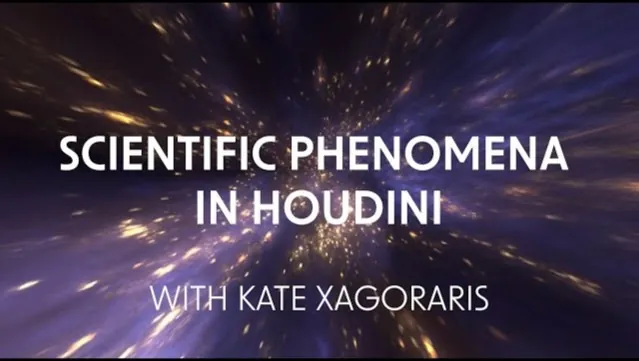
HS-112 Scientific Phenomena in Houdini by Kate Xagoraris
Actual Duration:5h 37m
Release date:2024
Publisher:Houdini School
Skill level:Intermediate
Language:English
Exercise files:Yes
Software:Houdini
Course URL:https://www.houdini.school/courses/hs-112-scientific-phenomena-in-houdini
This class is about making your effects believable. You will build storm clouds, a full procedural solar system, and organic growth systems in Houdini, and you will use actual science to decide how they look and move.
🎯 What you’ll learn
- Build layered storm clouds using real cloud formation logic
- Create cirrus, head, top, side, and background cloud layers for depth
- Add rain, lightning, and final lighting/render for a storm shot
- Build a procedural solar system with sun, planets, moons, and orbit rings
- Work with points, point attributes, and procedural geometry for orbits
- Create Saturn-style rings and merge complex planetary setups
- Build growth and branching systems based on natural patterns
- Clean up and make growth systems render-ready for coral and marine structures
✅ Requirements
- Skills: Basic familiarity with Houdini UI, SOPs, and viewport navigation
- Tools: Houdini (Apprentice / Indie / FX), 3-button mouse
- Hardware: 16GB+ RAM, dedicated GPU recommended for volumetric rendering
📝 Description
This is a recorded Houdini School class about thinking like a scientist when you build effects. The idea is simple: if you know how a thing works in real life, you stop guessing in Houdini and start making better choices.
First up is weather. You break down how storm cells actually form, then build them in layers. Side clouds, main mass, large puffs, cirrus clouds, top and background layers. You stack them for scale and parallax instead of one big blob. Then you finish the shot with rain, lightning, and a render setup. It looks stormy because the structure is right.
Then you switch to space. You build a full solar system from scratch — sun, planets, moons, orbit rings. You work with points and point attributes to drive placement and motion, make procedural geometry for rings and moons, and merge it all into a clean, controllable setup. Great practice for any large procedural build.
Last part is my favorite: growth. You set up a branching growth algorithm that mimics how coral and other marine structures actually grow. Start points, direction, food points, branch logic, cleanup, renderable geometry. Once you get it, you can scatter it on other geometry and get natural patterns fast.
No fluff, just builds. You watch how small scientific decisions change the look, and you end up with setups you can reuse for demo reel shots.
🧑🎓 Who this course is for
- Houdini users who know the basics and want effects that actually hold up on a reel
- FX and lookdev folks who want practical cloud, space, and organic builds without guesswork
🧑🏫 About the Author
Kate Xagoraris is a Houdini artist and instructor at Houdini School focused on science-driven procedural effects. She teaches volumetrics, planetary builds, and natural growth systems with a practical, build-it-from-scratch approach. Her classes are known for clear breakdowns and setups students can reuse in production-style shots.
🏁 Final Result
- A rendered storm cloud scene with layered volumetrics, rain, and lightning, plus a procedural solar system with planets, moons and rings, and a renderable growth system suitable for coral and organic environments.
 Channel