

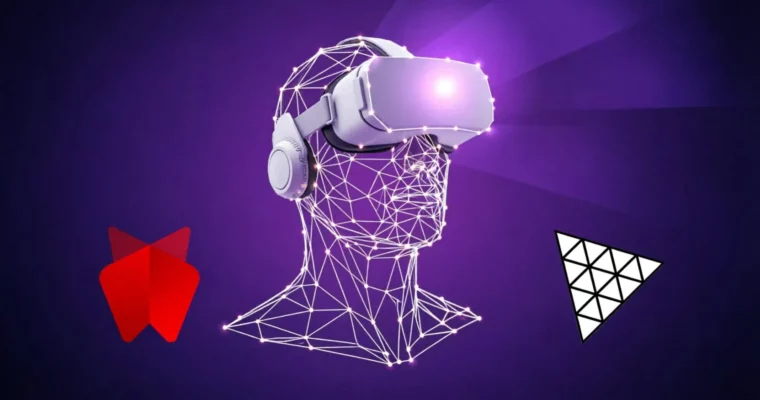
Learn to create WebXR, VR and AR, experiences using Three.JS by Nicholas Lever
Duration:5.5 hours
Actual Duration:5h 11m
Release date:2024, November
Publisher:Udemy
Skill level:Intermediate
Language:English
Exercise files:Yes
Software:Three.JS, WebXR, JavaScript, Brackets, GitHub
Course URL:https://www.udemy.com/course/learn-webxr
Ready to bring virtual and augmented reality right into the web browser? This course dives into WebXR and the incredibly versatile Three.JS library, showing you how to build immersive experiences that work on devices like the Oculus Quest and even your phone. If you’re comfortable with JavaScript, you’re all set to start creating interactive VR and AR apps without any extra installations needed for your users.
🎯 What you’ll learn
- Easily create VR and AR apps that run directly in the browser.
- Master the Three.JS library for building these immersive applications.
- Effectively handle and customize controller inputs.
- Develop engaging architectural walk-throughs, games, and training applications.
- Implement in-world UI elements for better user interaction.
- Build AR apps with real-world hit testing capabilities.
- Learn core VR game techniques like teleporting and object interaction.
✅ Requirements
- Skills: An intermediate level JavaScript ability is assumed.
📝 Description
WebXR is bringing both VR and AR experiences directly to the browser. With major backing from companies like Google and Amazon, it’s poised to make a significant impact. WebXR works seamlessly with Oculus headsets, including the Oculus Quest 2, and the Chrome Android browser already supports it for both AR and VR. The API essentially leverages a mobile device’s sensors and standardizes how this data is used. To visualize 3D content, you’ll need a WebGL library, and Three.JS is an excellent, mature choice. This open-source library, currently at version 118, is robust and production-ready, with recent additions making WebXR integration straightforward for developers looking to create immersive experiences.
This course will show you just how easy it is to build VR and AR experiences using Three.JS. A solid understanding of JavaScript coding is recommended, but no other specific prerequisites are needed.
The course is structured into 10 main sections:
- Introduction: Get acquainted with the history of WebXR, a quick 3D primer for newcomers, and an overview of the Three.JS website and its WebXR examples.
- A Three.JS Primer: Designed for Three.JS novices, this section will get you up to speed with the library’s core functionalities.
- An Introduction to WebXR using Three.JS: We’ll dive into your development environment and create our first WebXR examples.
- Using Complex Assets with Three.JS: Most immersive projects require complex assets. This section covers sourcing, editing, loading, and working with them effectively.
- The WebXR API: A focused review of the WebXR API itself.
- Creating an Architectural Walk-Through: Start building real-world examples of immersive content, beginning with an architectural walk-through.
- Placing a Product in a Room: WebXR is perfect for showcasing products in a user’s environment, which is the focus of this section.
- Using WebXR for Games: VR is ideal for gaming. Here, we’ll explore the fundamental elements of creating a game using WebXR.
- Using WebXR for Training: Covers the critical topic of leveraging VR for educational and training purposes.
- Conclusion: We’ll explore inspiring WebXR examples and recap your learning journey.
You’ll only need a code editor; the course uses Brackets, which is free. The course provides extensive resources and code examples, with each example offering a version for you to follow along and a complete version for reference. You’ll also learn how to use GitHub to host your development work on a secure server, making it easy to test your projects on a headset like the Oculus Quest.
It’s going to be a blast! You get a 30-day money-back guarantee, so there’s nothing to lose. Get virtual today!
🧑🎓 Who this course is for
- Anyone keen on using the latest WebXR API to build VR and AR experiences that work directly in the browser, no downloads needed.
🧑🏫 About the Author
Nicholas Lever brings a wealth of experience, starting his career in animation in 1980 before transitioning to programming with early home computers like the ZX81 and Commodore Amiga. After earning a degree in Maths and Computing, he delved into game development, particularly with Flash, and later explored HTML5 and Canvas. His company, Catalyst Pictures, has a strong track record, creating games and winning awards, even earning two BAFTA nominations. Nicholas has worked with major clients like the BBC, Johnson and Johnson, and Deloitte. Driven by a desire to improve developer talent, he now runs a CodeClub for kids and creates Udemy courses, focusing on real-time 3D using Three.JS or Unity. He’s currently enjoying developing WebXR games and experimenting with his Oculus Quest.
🏁 Final Result
- You’ll be able to create and deploy your own WebXR applications, including interactive VR and AR experiences, architectural visualizations, games, and training modules, ready to showcase in your portfolio.
 Channel