

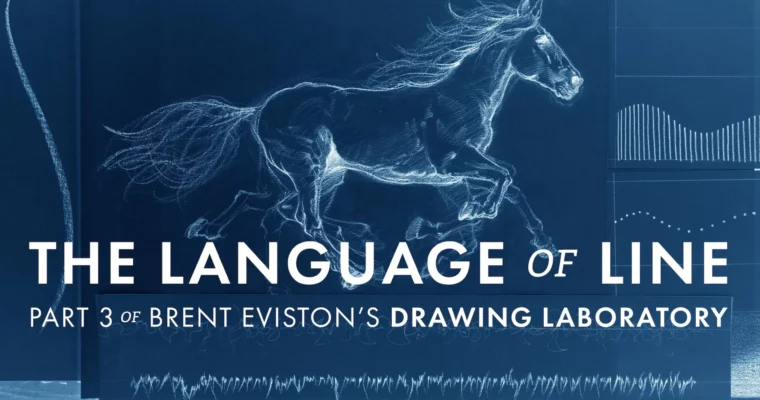
The Language of Line Part 3 of The Drawing Laboratory by Brent Eviston

Release date:2024, October
Publisher:Skillshare
Skill level:Intermediate
Language:English
Exercise files:Yes
Course URL:https://www.skillshare.com/en/classes/the-language-of-line-part-3-of-the-drawing-laboratory
Outlines do not exist in real life, yet they are how we talk in drawing. This course shows you how to use line quality, contour, and mark-making to describe form and trigger real emotion, so your work stops looking flat and starts sounding like you.
🎯 What you’ll learn
- Create lines that evoke specific emotions and ideas on purpose
- Use contours to make flat shapes feel truly three-dimensional
- Draw textures that look touchable with simple mark-making
- Suggest time and motion with direction, weight, and rhythm
- Build your personal drawing style through intentional line choices
✅ Requirements
- Skills: Basic drawing fundamentals, comfortable sketching simple objects. Helpful to have finished How to Draw: A Beginners Guide and Drawing in 3 Dimensions, but not required.
- Tools: Graphite pencils, ink pen or fineliner, eraser, smooth sketchbook paper
📝 Description
Here is the thing no one tells beginners: every line talks. It tells the viewer what the thing is, and it also tells them how to feel about it. Light, shaky, fast, heavy, slow — your hand is sending signals whether you plan it or not. This course is about taking the controls.
Brent breaks it down in a super practical way. You will look at contour drawing not as tracing edges, but as a tool to push and pull form. You will test how pressure, speed, and tool change the read of the same object. Same cup, five different moods. That is the whole game.
Then you get into the fun stuff: surface texture and implied motion. How do you make fur feel soft and metal feel hard with just black marks on white paper? How do you make a static pose feel like it just moved? Brent gives you specific mark vocabularies to try, not vague advice to be more expressive.
What I like is that style is not treated like magic here. Your personal style is just the sum of your repeated line decisions. By the end you are not copying someone else, you are starting to notice your own preferences — what weight you like, how tight or loose you go, when you let a line disappear.
This is Part 3 of The Drawing Laboratory, so it sits right between solid form-building and the next course on shading. If your drawings look correct but feel dead, this is probably the missing piece.
🧑🎓 Who this course is for
- Beginners who can draw a bit but their work feels stiff or flat
- Self-taught artists who want intentional control over style and mood
- Students of the Drawing Laboratory series ready for Part 3 after form and perspective
🧑🏫 About the Author
Brent Eviston spent 20 years teaching drawing in person through art studios, schools, and museums before moving online. He tested traditional methods, tossed what did not work, and built his own way of teaching that actually gets beginners drawing well.
His first series, The Art and Science of Drawing, enrolled over half a million students in more than 180 countries. With the Drawing Laboratory series, he pulls together all that classroom and online experience into a hands-on, make-stuff approach focused on drawing anything and enjoying the process.
🏁 Final Result
- A set of expressive line studies and finished drawings showing controlled contour, texture, and mood — a clear step toward a recognizable personal style for your portfolio.
 Channel