

The 12 Principles of Animation by Animawarriors
Actual Duration:11h 8m
Release date:2023
Publisher:Animawarriors
Skill level:Beginner
Language:English
Exercise files:Yes
Course URL:https://www.animawarriors.com/
This is the foundation everything else sits on. Animawarriors breaks down the classic rules from Frank Thomas and Ollie Johnston’s The Illusion of Life into plain, practical stuff you can use right away in 2D animation or 3D animation. No fluff, just why squash and stretch sells weight and how timing sells everything else.
🎯 What you’ll learn
- How to use squash and stretch to sell weight and flexibility
- How to stage anticipation so actions read clearly
- How to plan staging for readability with pose, framing, and focus
- Difference between straight ahead action and pose-to-pose workflow
- How to add follow through and overlapping action for hair, clothes, and tails
- How to use slow in and slow out to kill robotic motion
- How to animate on arcs for natural, believable trajectories
- How to layer secondary action without stealing focus
- How to control timing and spacing for weight and mood
- How to use exaggeration to push poses past boring reality
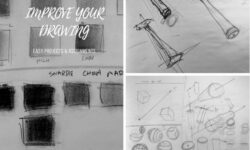
- Basics of solid drawing for volume, balance, and anatomy
- How to build appeal with charismatic design and clear acting
✅ Requirements
- Skills: No prior animation experience needed, basic understanding of keyframes helps
- Tools: Any 2D or 3D animation app for practice, pen and paper for thumbnails
- Hardware: Standard computer capable of video playback and running animation software
📝 Description
Look, you can know the software and still have dead shots. This course fixes that. It goes principle by principle and shows what each one solves in a real shot. Why your jump feels floaty. Why your hit has no punch. Why no one looks where you want them to look.
You start with physics stuff – squash and stretch, slow in and slow out, arcs. That’s how you get weight. A bouncing ball is the classic example, but the same idea applies to a face take, a body fall, or a tail swish. You learn to cheat shape and spacing to fake mass and flexibility.
Then it gets into workflow and readability. Pose-to-pose versus straight ahead, staging, solid drawing. This is the planning part most beginners skip. You will see how to block keys first for control, how to pick a pose and camera that actually tells the story, and why good volume and balance matter even if you work in 3D.
The last half is what makes animation fun. Anticipation sets up the action, follow through and overlapping action keeps it alive after the stop, and secondary action adds that little extra gesture that sells character. Add smart timing and a push of exaggeration, and suddenly the same rig or drawing feels like it has personality. That’s the whole point of appeal – not cute design, but clear acting people want to watch.
🧑🎓 Who this course is for
- Total beginners who want the right fundamentals from day one
- 2D and 3D animators whose work feels stiff, floaty, or unclear
- Illustrators, motion designers, and game artists adding animation to their skillset
🧑🏫 About the Author
Animawarriors is an animation-focused training team built around practical character animation and acting for animators. They teach the Disney-era fundamentals in a way that works for modern frame-by-frame and rig-based pipelines. Their thing is short, clear breakdowns with lots of visual examples, not long theory lectures.
🏁 Final Result
- A set of principle-based animation tests – bouncing ball, anticipation jump, overlapping tail/cloth test, and a short acted pose sequence – ready to use as foundation pieces for a beginner demo reel.
 Channel