

CLO3D to Real Garment Pattren Printing, Cutting & Sewing by Masturah Muwanga

Duration:1 hour on-demand video
Actual Duration:1h 6m
Release date:2026, August
Publisher:Udemy
Skill level:Intermediate
Language:English
Exercise files:Yes
Software:CLO3D
Course URL:https://www.udemy.com/course/clo3d-to-real-garment-pattern-printing-cutting-sewing
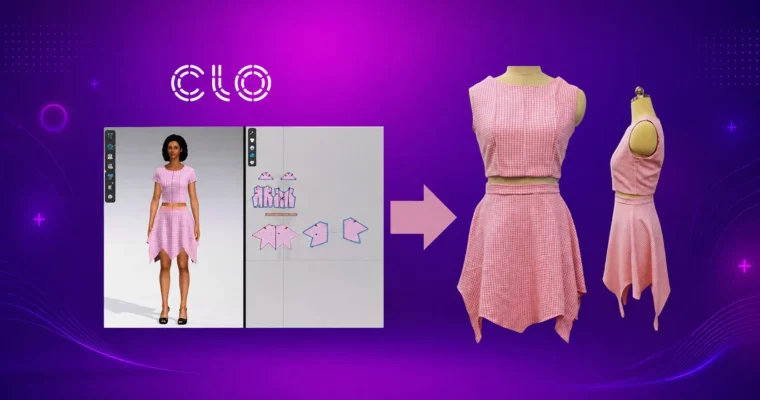
This course is the missing link between your digital CLO3D designs and the physical garments you actually want to wear. It walks you through the entire pipeline: exporting patterns from CLO3D, printing them at full scale, cutting fabric, and sewing a real sample. No fluff, just the practical steps that most CLO3D tutorials skip.
🎯 What you’ll learn
- Translate 3D garment designs into accurate 2D patterns ready for real-world cutting and sewing.
- Convert CLO3D pattern pieces into printable, scaled pattern files (PDF/DXF) for future use.
- Set up and print full-size pattern pieces from CLO3D files using dedicated pattern-printing software.
- Construct a physical garment sample from a CLO3D design, including seam allowances, grading, and finishing details.
✅ Requirements
- Skills: Basic familiarity with the CLO3D interface, including creating a simple garment and working with 2D pattern pieces. Basic garment sewing skills.
- Tools: Access to a printer capable of printing pattern pieces at home (inkjet/laser with tape-together pages works fine). Sewing tools, fabrics, and accessories.
- Hardware: A computer capable of running CLO3D (Windows or Mac) with CLO3D installed.
📝 Description
Most CLO3D tutorials stop the moment your design looks perfect in the 3D viewer. They teach you how to model, drape, and render, but they leave you stranded when it’s time to turn that digital pattern into something you can hold, cut, and sew. This course picks up exactly where those tutorials end.
You’ll start by understanding how CLO3D pattern data translates into real-world measurements and seam allowances. From there, you’ll learn how to use dedicated pattern printing software to output your pieces at true scale, avoiding the common sizing mistakes that ruin a garment before it’s even cut. The workflow is clear and repeatable: export, print, assemble, cut, sew.
The course also covers fabric selection, so what you sew matches the drape and behavior you simulated in CLO3D. You’ll move through cutting, assembling, and finishing a real garment step by step. By the end, you’ll know how to troubleshoot the small discrepancies that always show up between simulation and reality, and you’ll have the confidence to repeat this workflow with any future design.
This isn’t a CLO3D basics course, and it’s not a general sewing class either. It’s the bridge between the two worlds.
🧑🎓 Who this course is for
- Fashion design students and hobbyists who have learned the basics of CLO3D and want to take their digital designs into the physical world.
- CLO3D users who can create a garment digitally but don’t know how to turn that design into a real, wearable sample.
- Independent designers and small brands who want to prototype garments faster by combining 3D design software with real-world pattern printing and construction.
- Sewists and pattern-makers curious about integrating digital tools like CLO3D into their existing physical workflow.
🧑🏫 About the Author
Masturah Muwanga is a fashion designer and educator who specializes in bridging digital fashion design with physical garment construction. With hands-on experience in both CLO3D and traditional sewing techniques, she focuses on practical workflows that help designers move from concept to finished sample efficiently. Her teaching style is direct and project-oriented, emphasizing real-world application over theory.
🏁 Final Result
- A completed physical garment sample that matches your CLO3D design, from printed pattern pieces to cut fabric to finished sewing.
- A repeatable workflow for turning any future CLO3D design into a real, wearable garment.
 Channel