

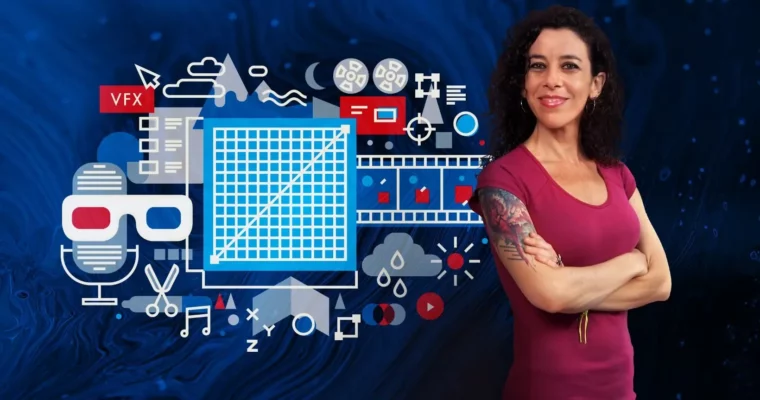
Layout for VFX, Camera Narrative and Language by Carolina Jiménez García
Actual Duration:2h 55m
Release date:2018, December
Publisher:Domestika
Skill level:Beginner
Language:Spanish
Exercise files:Yes
Software:Maya
Course URL:https://www.domestika.org/en/courses/299-layout-for-vfx-camera-narrative-and-language
This course is about the unsung hero of VFX: the layout artist. Carolina Jiménez García breaks down how to think like a cinematographer inside Maya, teaching you to block out scenes, place cameras with narrative intent, and speak the language of film. It’s not about fancy renders—it’s about making smart choices before the heavy lifting begins.
🎯 What you’ll learn
- Understand the role of a layout artist in the VFX pipeline.
- Master cinematographic concepts like framing, composition, and camera movement.
- Set up and manage cameras in Maya for VFX shots.
- Block out animation and export layout data for the pipeline.
✅ Requirements
- Skills: No prior Maya knowledge is required, but a basic interest in film or visual storytelling helps.
- Tools: A video camera (a phone is fine) and a computer with a video editing program.
- Hardware: A computer capable of running a video editing program.
📝 Description
This isn’t a “click-this-button” tutorial. Carolina focuses on the cinematographic language that makes a VFX shot work. You’ll learn the difference between a set camera, a tracking camera, and a layout camera, and when to use each. She covers the psychology of film narrative, how focal length and parallax affect the audience, and the classic 180-degree rule for dialog coverage.
The course is practical but not software-heavy. While she uses Maya for demonstrations, the core ideas apply to any 3D package. You’ll learn how to block out a scene, think about positive and negative space, and export your work so the next team in the pipeline can run with it. It’s about building a solid foundation in visual storytelling for VFX.
🧑🎓 Who this course is for
- VFX students who want to understand the pre-visualization stage.
- Animators looking to improve their camera work and storytelling.
- Filmmakers and movie enthusiasts curious about how VFX shots are planned.
🧑🏫 About the Author
Carolina Jiménez García is a seasoned layout artist with over a decade of experience in the VFX industry. She has worked at major studios in Australia, New Zealand, and the UK, contributing to blockbuster films like The Hobbit trilogy, World War Z, Prometheus, Ant-Man and the Wasp, and Justice League. She currently works as a Layout Artist at Scanline VFX in Vancouver, Canada.
🏁 Final Result
- A planned and blocked-out cinematographic scene, demonstrating your understanding of camera narrative and layout workflow.
 Channel