

Quantum Shield, Eternal Ascent C4D Breakdown by Calars

Duration:3 hours 35 minutes
Actual Duration:3h 31m
Release date:2026
Publisher:Diptorial
Skill level:Intermediate
Language:English
Exercise files:Yes
Software:Cinema 4D
Course URL:https://diptorial.com/classes/288318
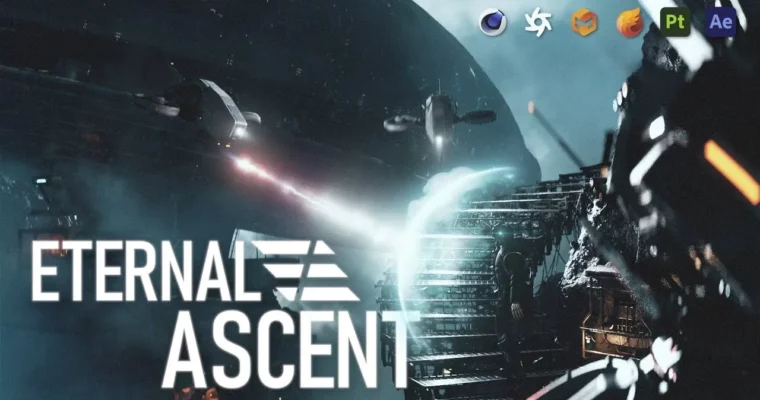
This course is for artists who want to see how a finished Cinema 4D challenge piece comes together without sitting through a bloated theory dump. It centers on Calars’ “Quantum Shield” entry and frames the breakdown around the Eternal Ascent challenge format, so the value here is in seeing how a stylized concept gets turned into a clean, presentable 3D scene with mood, structure, and a strong final image.
🎯 What you’ll learn
- Break down a finished C4D artwork into practical production steps
- Build a stylized scene with stronger composition, atmosphere, and visual hierarchy
- Understand how a challenge-driven piece can be pushed toward a polished final render
✅ Requirements
- Skills: Basic familiarity with Cinema 4D, scene navigation, and standard 3D workflow
- Tools: Cinema 4D, a 3-button mouse
- Hardware: Minimum 16GB RAM, dedicated GPU recommended for smoother viewport and rendering work
📝 Description
This one looks built for artists who already know their way around a 3D app and want to study decisions, not just button clicks. The course is centered on a single finished piece, which usually makes these breakdowns more useful than broad beginner classes because you can track how composition, lighting, and scene design all support one final frame.
The hook is the project itself: “Quantum Shield” is presented as a Cinema 4D breakdown tied to the Eternal Ascent challenge. That challenge was run as a community 3D event around the “Eternal Ascent” theme, which gives useful context for why the piece leans so hard into vertical movement, atmosphere, and a strong hero image.
Expect this to be less about building generic assets from scratch and more about understanding pipeline choices. You are watching how an artist organizes a scene, decides what matters on screen, and pushes the render until the image reads fast. That is the kind of material that helps when your own work looks technically fine but still feels flat.
The KR-EN subtitle setup also makes the class practical for a wider audience. If you are comfortable inside C4D and want a tighter look at a stylized project breakdown, this format makes sense because it stays close to a real piece instead of drifting into vague inspiration talk.
🧑🎓 Who this course is for
- Intermediate 3D artists who want to reverse-engineer a polished Cinema 4D artwork
- Motion designers looking to strengthen scene design, lighting, and presentation in still or cinematic frames
- Challenge participants who want to study how a themed competition piece is structured and finished
- Artists comfortable with Korean audio who prefer English subtitles over dubbed instruction
🧑🏫 About the Author
Calars is the credited instructor for this Diptorial class and the artist behind the “Quantum Shield” breakdown. Based on the course title, the teaching angle is very project-driven: instead of covering Cinema 4D in a broad way, Calars focuses on showing how one finished piece is constructed, shaped, and polished for a challenge-style presentation. Specific biography details and prior credits are not clearly available from the provided source, so this section needs a later update for a fuller professional profile.
🏁 Final Result
- A polished Cinema 4D scene breakdown you can apply to your own challenge entries or portfolio pieces, with a clearer sense of how to build mood, structure a vertical composition, and push a stylized render toward a stronger final image.
 Channel